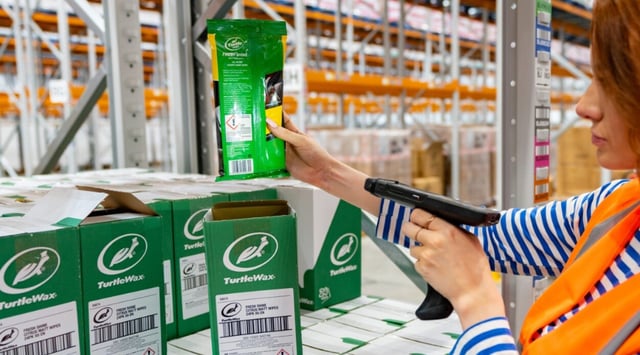
Peak season brings the busiest time of year for eCommerce and retail businesses, with major shopping events and holidays bringing sharp increases in order volumes over short periods.
For most eCommerce brands in the US, the main peak season falls between October and December. Thanksgiving, Black Friday, Cyber Monday, and Christmas all land within a hectic few weeks, creating a huge concentration of online shopping.
What that means for businesses is straightforward: more orders mean more inventory to manage, more products to pick and pack, and more customers expecting products to arrive on time.
And, once the holidays are wrapped up, there’s another challenge waiting: returns. Fun, right?
So, let’s take a deeper look into what peak season means for businesses, when it happens in the US, and what you can do to make sure your fulfillment operation is ready for it.
What does peak season mean in eCommerce?
Peak season is a period when order volumes are significantly higher than usual, typically because of holidays or major sales events.
An eCommerce brand might spend most of the year processing predictable order volumes, only to see those volumes increase dramatically when Black Friday comes around.
But these events don’t just impact sales. These order increases run through every part of the operation, meaning more is needed of everything. More products available, more fulfillment capacity, more parcels to be collected by carriers. You get the message.
That’s why there are a few different ways you’ll hear people talk about peak season.
Retail peak season is the period when customer purchasing increases significantly.
eCommerce peak season is when online stores experience unusually high traffic and order volumes.
Logistics and fulfillment peak season is the operational knock-on effect of that demand, from receiving inventory and storing products to picking, packing, shipping, and returns.
Effectively, they’re all different elements of the same thing.
If you’re selling more, your fulfillment needs to handle more.
When is peak season in the US?
For most US eCommerce businesses, peak season runs from October through December, with the most intense period falling between Thanksgiving and Christmas.
Some peak seasons — such as health and supplements — run through January, but for the most part, brands consider the October to Christmas stretch as peak season.
But there’s no magic switch that someone flicks to turn on peak season. Customers are increasingly beginning to shop way in advance of Thanksgiving, and retailers are following suit with earlier promotions and discounts to take advantage of these well-prepared shoppers (show-offs).
From a fulfillment perspective, peak starts even earlier.
If you wait until Black Friday to start thinking about inventory, warehousing, or shipping, you’re already way too late (and frankly, you’ll need all the luck in the world).
In practice, eCommerce businesses spend much of the year preparing for a peak that only lasts a few months. But it is that important. For a lot of brands, peak is make or break.
Key US eCommerce peak season dates
While every business is different and has its own sales patterns, there are several key dates that tend to put additional pressure on US retail and fulfillment networks.
|
Event |
Typical timing |
Why it matters |
|
Halloween |
October 31 |
Major seasonal demand for categories including costumes, candy, decorations, and party supplies |
|
Early holiday shopping |
October-November |
Holiday promotions increasingly start before Thanksgiving |
|
Thanksgiving |
Fourth Thursday of November |
Marks the beginning of the core Cyber Week shopping period |
|
Black Friday |
Friday after Thanksgiving |
One of the biggest retail and eCommerce sales events of the year |
|
Small Business Saturday |
Saturday after Thanksgiving |
Important shopping period for independent and smaller US retailers |
|
Cyber Monday |
Monday after Thanksgiving |
Major online shopping event with high eCommerce order volumes |
|
Cyber Week |
Around Thanksgiving through Cyber Monday |
Concentrated period of promotions, sales, and fulfillment activity |
|
Christmas shopping period |
December |
Delivery deadlines put additional pressure on fulfillment and carrier networks |
|
Super Saturday |
Final Saturday before Christmas |
Major period for last-minute holiday shopping |
|
Christmas Day |
December 25 |
Critical deadline around which holiday delivery expectations are built |
|
Post-Christmas sales |
December 26 onwards |
Post-Christmas discounts for retailers across several industries |
|
Holiday returns |
Late December-January |
Increased returns create another wave of logistics activity |
It’s important to not only know these dates, but understand how each will impact your particular industry.
Your own data should ultimately tell you when your peak starts and ends.
Is peak season only during the holidays?
No. The holiday season is the biggest peak period for many US eCommerce businesses, but peak season can happen at any point in the year.
It depends on what you sell and when your customers tend to buy it. For example, if your brand sells supplements, you’re more likely to see a spike in sales post-Christmas, rather in the week running up to it. New year, new me.
Other US eCommerce peak periods
Amazon Prime Day creates a major summer eCommerce event, and the impact isn’t limited to businesses selling through Amazon. Consumers are actively looking for deals, so other retailers often run competing promotions around the same period.
Valentine’s Day can create a major spike for businesses selling jewelry, beauty products, flowers, gifts, and other relevant products.
Mother’s Day and Father’s Day can have a similar effect for gift-focused categories.
Back-to-school season is another important US retail period, particularly for apparel, electronics, stationery, footwear, and children’s products.
And then there are peaks that have nothing to do with the national shopping calendar.
A successful product launch can create one.
So can a flash sale, influencer campaign, viral social media post, or particularly effective email campaign.
So, while the holiday calendar matters, your own order history is one of the best ways to identify your real peak season.
Why is peak season so important for eCommerce businesses?
Peak season can account for a significant chunk of an eCommerce business’s annual sales.
It can also bring thousands of new customers to a brand for the first time.
It’s a huge opportunity, but one that brings extra pressure.
Attracting a new customer during the holidays isn’t valuable long-term if their first experience with your brand involves a late delivery or confusing returns process.
Peak season therefore brings a sales opportunity and an operational stress test.
The brands that handle it well not only bring new sales in, but turn holiday shoppers into customers for life.
What happens to eCommerce fulfillment during peak season?
During peak season, fulfillment operations have to process substantially more inventory and orders within roughly the same amount of time.
If your normal fulfillment operation is built around average daily volumes, a sudden surge can expose capacity problems very quickly.
Inventory and storage
Before you can ship more products, you need to have those products available.
That means forecasting which SKUs are likely to sell, ordering enough inventory, getting it into your fulfillment network, and making sure there's enough space to store it.
Forecast too low, and popular products can sell out while demand is at its highest.
Go too far in the other direction, and you could enter January with warehouses full of products that didn't sell. Expensive.
Warehouse capacity
A warehouse that works perfectly well for the other ten months of the year can suddenly become a bottleneck during peak.
There are only so many orders that can move through receiving, picking, packing, and dispatch within a given period.
Storage space matters too.
Peak inventory often arrives before peak orders do, meaning warehouses can be at their fullest immediately before they're expected to operate at their fastest.
Labor
Higher order volumes usually mean more work.
If the fulfillment process depends heavily on adding temporary labor every peak season, that brings its own challenges. People need to be recruited, trained, managed, and made productive quickly.
And because peak happens across the industry at roughly the same time, you're not the only business looking for additional capacity.
Order accuracy
When volumes rise, the temptation is to focus entirely on speed.
But an order arriving quickly isn't much use if it's the wrong order.
Picking and packing errors can lead to replacement shipments, additional customer service work, extra shipping costs, and returns. At peak, when the operation is already busy, fixing mistakes creates even more work.
The goal is to scale speed without sacrificing accuracy. Not easy, but doable with the right technology and setup behind-the-scenes.
Carrier capacity and delivery times
Your warehouse isn't operating in isolation.
UPS, FedEx, USPS, and other carrier networks are dealing with their own peak at exactly the same time.
More parcels are entering the network, delivery deadlines become more important, and severe winter weather can add another layer of unpredictability.
Carrier choice, collection capacity, shipping services, and cutoff times all become much more important as Christmas approaches.
Returns
Peak season doesn't finish when the last Christmas order leaves the warehouse. For many retailers, there's another wave coming in the opposite direction.
Returns tend to increase after the holidays, which means products need to be received, inspected, processed, refunded, and potentially returned to sellable inventory.
A good peak-season plan therefore needs to cover January as well as November and December.
How to prepare properly for the peak season
The best time to solve a peak-season problem is way before peak season starts.
Here’s how.
1. Review last year's peak performance
Start with what actually happened last time.
Look at order volumes by day and week. Which SKUs sold fastest? When did demand begin increasing? Did anything sell out? How quickly were orders fulfilled? Were there shipping delays? When did returns start arriving?
And don't just look at what went well. Looking into what went wrong often helps you more.
If your fulfillment time suddenly increased during Cyber Week, find out why. If a particular product repeatedly ran out of stock, understand what went wrong with the forecast.
2. Forecast peak demand
Historical sales are a good starting point, but don't just copy last year's numbers.
Think about what's changed.
Have you grown significantly since then? Are you spending more on marketing? Launching new products? Entering new marketplaces? Planning a bigger Black Friday promotion?
Build those factors into the forecast.
It's also worth creating different scenarios rather than relying on one number.
What does the operation look like if you hit forecast? What happens if you're 25% above it? What happens if a promotion performs far better than expected and orders double?
Peak plans need some room to move.
3. Get inventory into position early
Don't wait until customers are buying before worrying about where the stock is.
Inventory needs time to be manufactured or sourced, transported, received into the warehouse, checked, stored, and made available for orders.
For brands selling across a large country like the US, where that inventory is held can matter too.
Placing products closer to where customers are located can reduce the distance orders need to travel and help create faster, more resilient delivery options.
4. Stress-test your fulfillment capacity
Ask a deliberately uncomfortable question: What happens if order volumes are twice as high as expected?
Where does the operation break first?
You'd rather discover that weakness during planning than the morning of Cyber Monday.
5. Coordinate marketing and fulfillment
Your fulfillment team shouldn't discover there's a major promotion happening when the orders start arriving.
Marketing, merchandising, inventory, customer service, and fulfillment should all be working from the same calendar.
If marketing is planning a huge discount on a particular SKU, the fulfillment operation needs to know.
That allows inventory to be positioned appropriately and capacity to be planned around the expected increase.
6. Set realistic shipping deadlines
Be clear with customers about when they need to order.
As Christmas gets closer, communicate delivery estimates, cutoff dates, and expedited shipping options prominently.
And make promises based on what your fulfillment and carrier networks can actually deliver.
A slightly less ambitious delivery promise that you consistently hit is better than an impressive one you regularly miss.
7. Prepare for returns before they arrive
Don't make January's returns problem January's problem.
Decide how returns will be handled before peak begins.
How will customers start a return? Where will products go? How quickly will they be inspected? What happens to products that can be resold? How quickly can inventory be made available again?
A smooth returns process is part of the customer experience, particularly after the holidays.
When should businesses start preparing for peak season?
US eCommerce businesses should ideally start preparing for peak season several months before Q4, rather than waiting until Black Friday is around the corner.
For larger or more complex businesses, peak planning can effectively be a year-round process.
A simple timeline could look like this:
January-March: Review
Look back at the previous peak while it's still fresh.
Review sales, inventory, fulfillment performance, carrier performance, returns, and customer feedback.
Identify what needs to change next time.
April-June: Forecast and plan
Start building demand forecasts and making the bigger operational decisions.
That could include inventory requirements, supplier plans, warehouse capacity, technology changes, and conversations with your fulfillment provider.
July–September: Prepare
This is where plans need to become reality.
Confirm inventory, integrations, fulfillment capacity, carrier arrangements, promotional calendars, and contingency plans.
Start moving stock into the right locations.
October: Final checks
By October, you shouldn't still be designing your peak strategy. This is the time for final checks.
Make sure inventory is where it needs to be, systems are working, teams understand the promotional calendar, and everyone knows what happens if demand exceeds expectations.
November–December: Execute
Visibility is your best friend here.
Keep a close eye on orders, inventory, fulfillment times, carrier performance, and emerging bottlenecks.
The sooner you spot a problem, the more options you have for dealing with it.
January: Returns and review
Handle the returns wave, then start reviewing what happened this time around.
Peak season has a habit of coming around quickly.
How can a 3PL help during peak season?
A third-party logistics provider, or 3PL, can help eCommerce businesses handle peak season by providing fulfillment capacity that can scale as order volumes change.
That's particularly useful because building an operation around your absolute busiest week of the year can be expensive.
Imagine your business normally ships 1,000 orders a month but needs capacity for 5,000 during peak.
A reliable fulfillment provider can offer:
- Flexible warehousing and storage
- Scalable picking and packing capacity
- Inventory management technology
- Real-time stock visibility
- eCommerce and marketplace integrations
- Access to multiple shipping carriers and services
- Distributed inventory across multiple fulfillment centers
- Returns processing
The important word here is scalable.
A fulfillment operation needs to be able to grow when demand increases without becoming an unnecessary fixed cost when demand falls again.
Peak season fulfillment with fulfilmentcrowd
Peak season shouldn’t result in you tearing your hair out every time (no, really).
With three centers across the US, fulfillment tech built and maintained in house, and a fulfillment network with 17 warehouses around the globe, fulfilmentcrowd provides the setup to make peak a little easier on your brand.
When you’ve got a fulfillment partner that’s tech-first, you get the forecasting potential and real-time visibility needed to both set you up for peak and help you navigate it.